Vibration Isolators: Types, Principles, and Crucial Uses
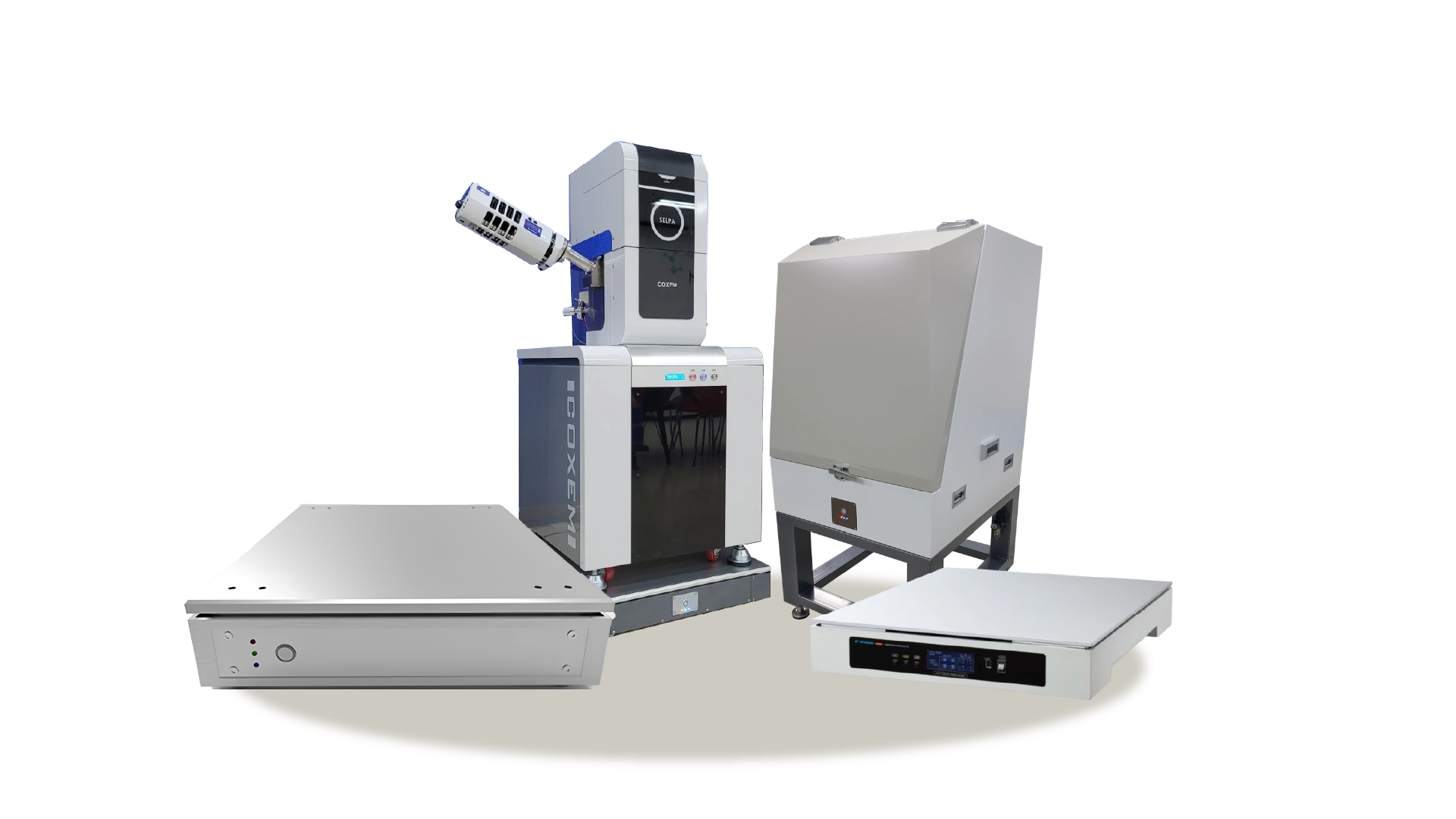
Vibration Isolators are devices designed to isolate vibration-sensitive equipment, such as microscopes, coordinate measuring machines, or semiconductor manufacturing equipment, from external vibrations. These vibrations can come from various sources, and even slight vibrations can significantly impact performance, resulting in blurred images or inaccurate data.
What you need to know about Vibration Isolators includes their working principles, importance, types, and applications. We at Hong Kong NTI will explain these in simple terms as follows:
How Do Vibration Isolators Work?
The working principle of Vibration Isolators involves creating a vibration isolation system with an extremely low Natural Frequency. When vibrations occur from external factors such as building movements, air conditioning systems, machinery, or even footsteps that generate vibrations with higher frequencies, the Vibration Isolators do not resonate with these factors. They absorb and isolate these vibrations, preventing them from being transmitted to the equipment placed on top.
The main components of Vibration Isolators rely on key elements such as springs that support the weight of the equipment. These may be metal springs or pneumatic components, which are very popular in applications requiring high precision.
Why Are Vibration Isolators Important?
Equipment requiring high precision or operating at micro or nanometer scales desperately needs Vibration Isolators for support. This includes electron microscopes such as SEM, TEM, or FESEM. Even slight vibrations can cause images to blur or shake excessively, making it impossible to analyze nano-scale structures. This makes the use of Vibration Isolators critically important. They are also essential in semiconductor equipment for processes like Lithography Nanofabrication, which is a chip manufacturing process requiring high stability. Vibrations can cause circuit patterns to shift or overlap.
What Types of Vibration Isolators Are There?
Generally, we can divide Vibration Isolators into two main types: Passive Isolators and Active Isolators.
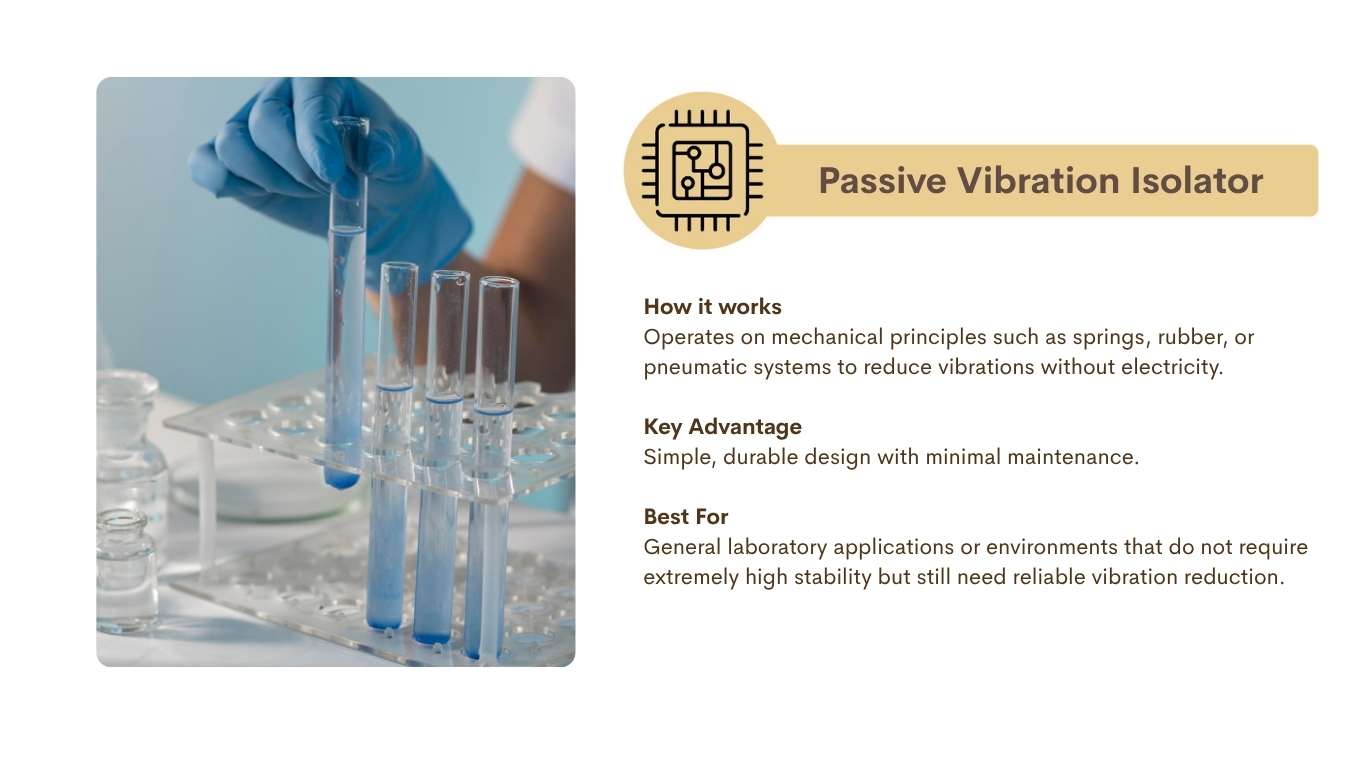
1. Passive Isolators
Passive Isolators are vibration isolation systems that rely on the physical properties of materials without requiring electrical power, such as rubber, metal springs, and pneumatic systems or air bags (Pneumatic Isolators). These are popular in applications requiring high precision as they can create very low frequencies, as low as 1-2 Hz.
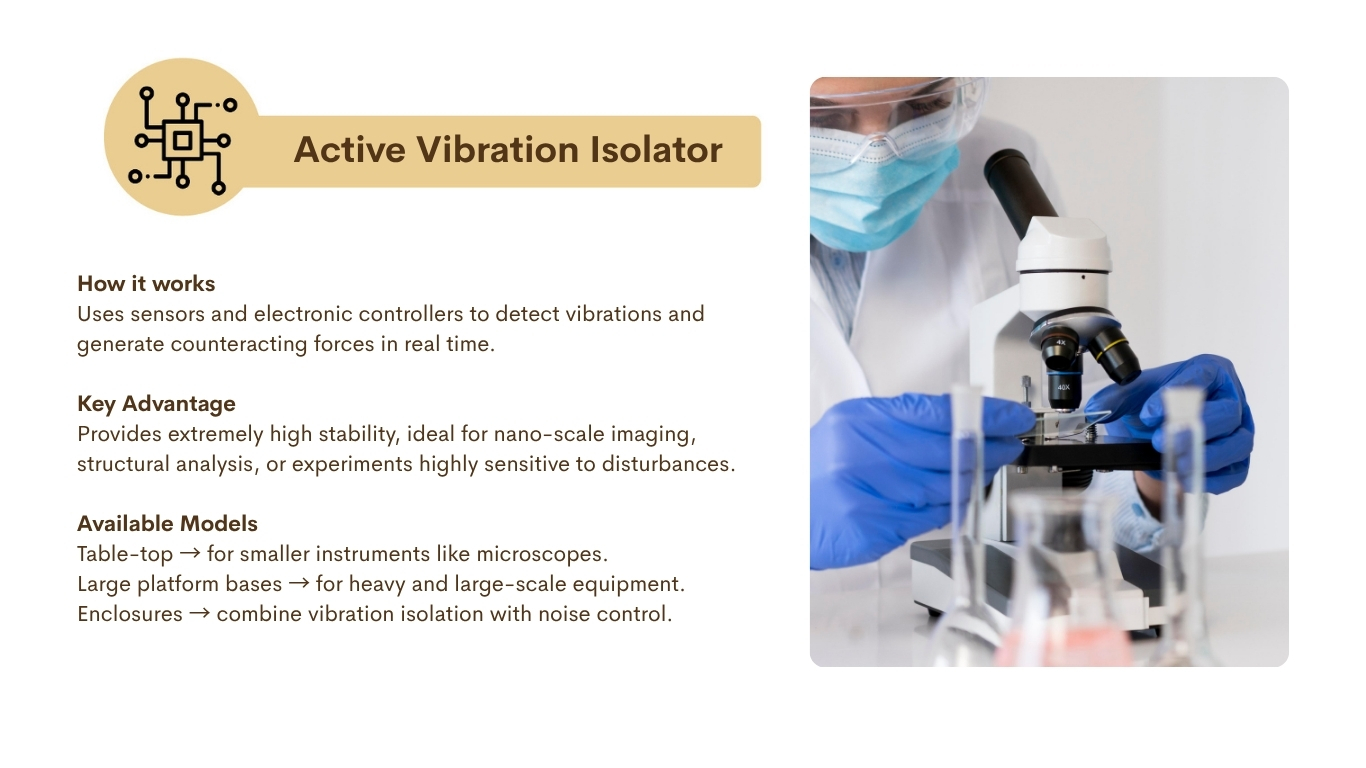
2. Active Isolators
Active Isolators are vibration isolation systems that use electrical power. Their main working principle involves using sensors to detect vibrations. They can reduce vibrations very effectively, especially in the low-frequency range of 0.5-10 Hz.
There are also Hybrid Isolators, which combine the advantages of both Passive and Active systems. For example, using an air bag system as a base and an Active system to cancel remaining vibrations, resulting in even greater performance.
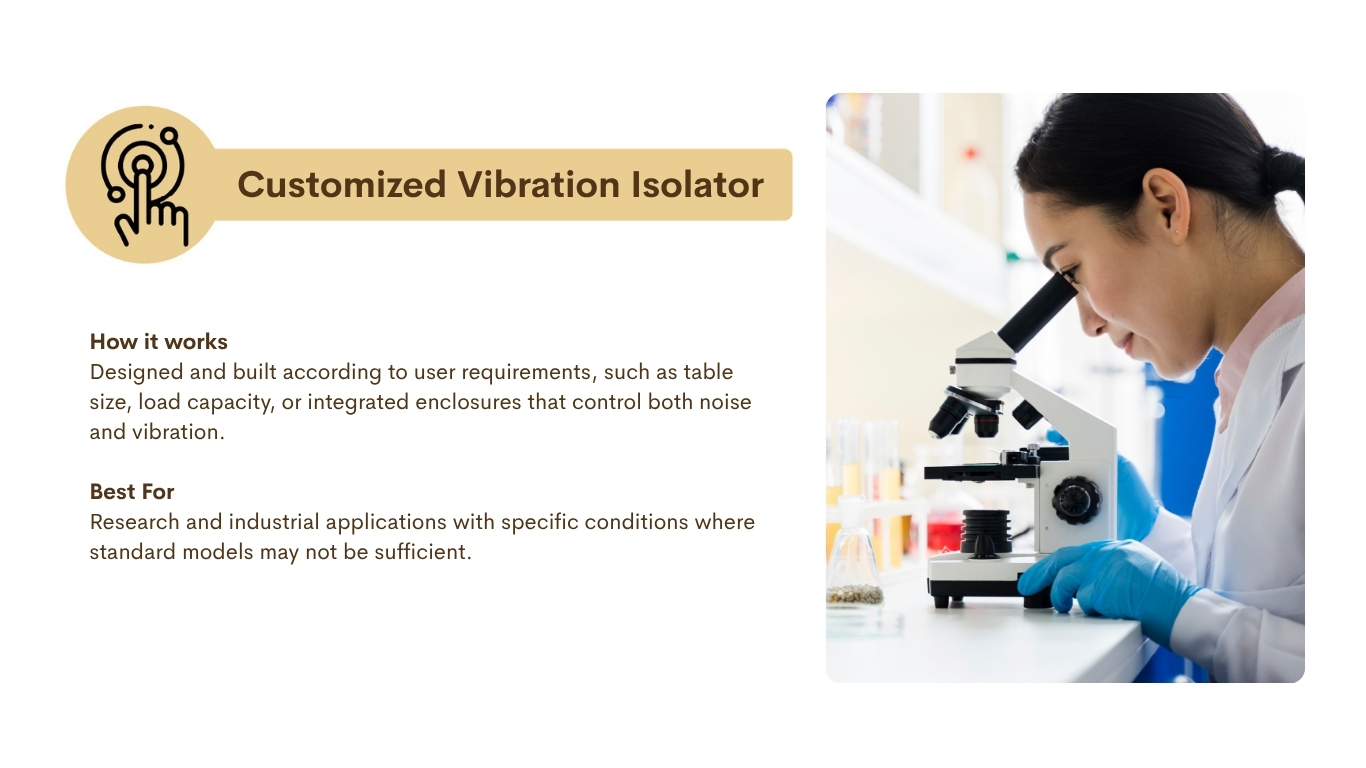
3. Customized Isolators
- Multi-Purpose: An active vibration isolation system that can be customized, designed to protect equipment or instruments sensitive to vibrations and noise. It uses sensors for detection and actuators to compensate for vibrations in real-time. It can be customized to suit different equipment and sizes, making it ideal for various research requiring precision measuring instruments, such as the semiconductor industry and manufacturing requiring high accuracy.
- SMU: Designed to work in both Passive and Active modes using vibration absorption mechanisms and Active sensors to compensate for vibrations in real-time. It can be customized according to specific needs, suitable for scientific research or industrial equipment requiring high precision.
Where Are Vibration Isolators Commonly Used?
Vibration Isolators are used in all industries where stability is crucial, especially:
- Semiconductor Industry: In "Cleanrooms" for Lithography equipment and Wafer Inspection machines
- Research and Development (R&D):
- Microscopes: Atomic Force Microscopes (AFM), Scanning Electron Microscopes (SEM), Transmission Electron Microscopes (TEM)
- Optical Tables: For laser-related experiments and measurements requiring stability
- Metrology & Quality Assurance (QA):
- Coordinate Measuring Machines (CMM)
- Surface Profilometers
- Medical and Biology: Cell analysis equipment, high-sensitivity MRI machines
Hong Kong NTI: Provider of Our Vibration Isolation System
Vibration Isolators are essential tools in laboratories and high-tech industries, whether for optical and electron microscopes, metrology measuring instruments, or semiconductor-related equipment. We at Hong Kong NTI provide our high-performance Vibration Isolation System designed for precision applications. With over 16 years of global expertise, we deliver equipment and services for efficient research and development.
If interested, you can contact us at 725 S-Metro Building, 20th Floor, Sukhumvit Road, Khlong Tan Nuea, Watthana, Bangkok.
Tel: 02-821-5278
Email: info@hknti.com
Line: https://line.me/R/ti/p/@816txpya