What is 3D Nano Printing? How does it work?
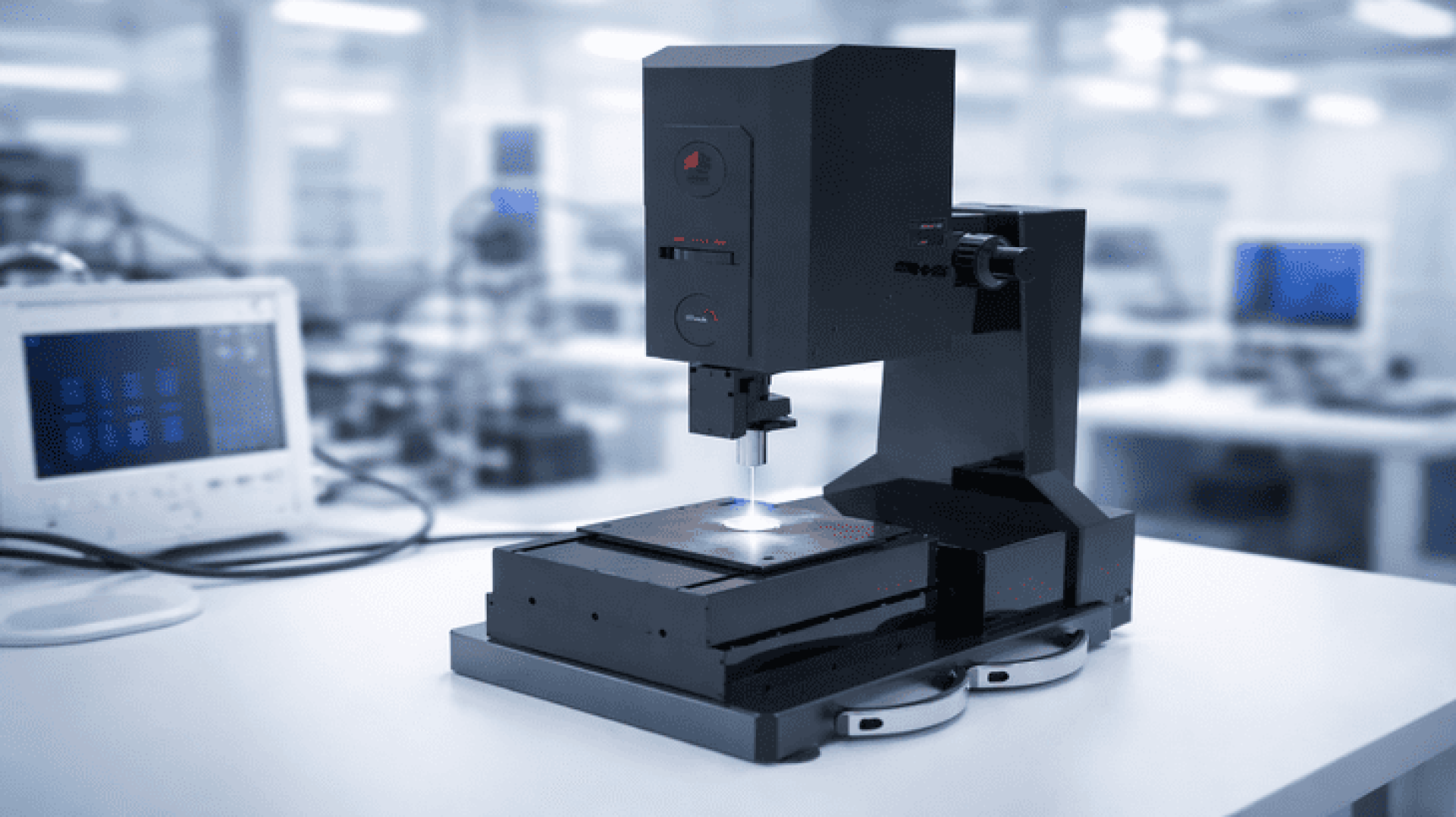
In the nano industry and nano-level research, nanotechnology has been continuously developing and shows a clear upward growth trend. In 2025, the global market is valued at approximately $104.88 -- 209.88 billion USD, driven by investments in health innovation, electronics, and materials science. This has led to the emergence of numerous nano-level technologies and tools, including 3D Nano Printing — a technology capable of manufacturing complex structures at the nanometer scale (up to 100 nm) with extremely high precision and detail, far surpassing conventional 3D printing by thousands of times.
So how does 3D Nano Printing work? What materials are used in this technology? And what are its benefits and applications? We at Hong Kong NTI, providers and distributors of micro- and nano-level measurement instruments, are here to answer these questions.
What is 3D Nano Printing?
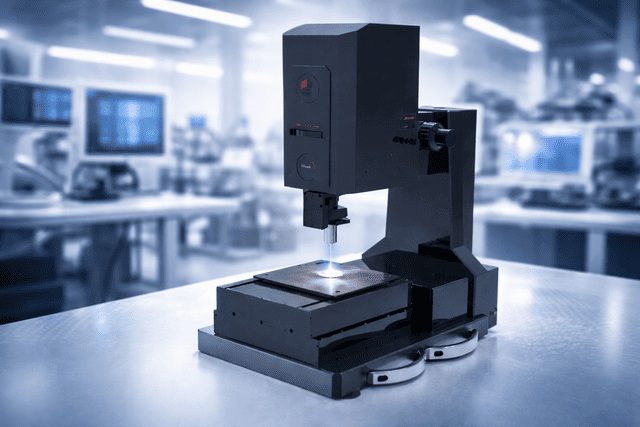
3D Nano Printing, or three-dimensional nano-scale printing, is a manufacturing technology that produces 3D printed objects at the nanometer scale (1–100 nanometers). It can create structures or components with incredibly fine detail at the molecular or atomic level for use in engineering, medicine, and electronics — offering the highest level of resolution that cannot be achieved through traditional manufacturing methods.
Working Principle of 3D Nano Printing
The most widely accepted, studied, and currently popular core technology is Two-Photon Polymerization (2PP), also known as the two-photon absorption principle.
The working process is as follows:
- Material Preparation: Begin by dropping a photosensitive resin (Photoresist) in liquid state onto the substrate.
- Laser Firing: The machine fires a femtosecond laser (Femtosecond Laser) with a specific wavelength into the material.
- Focal Point: The remarkable feature of 2PP is that the photosensitive resin does not harden along the entire path of the laser. It only hardens at the laser focal point (Voxel), which is nanometer-sized.
- Structure Drawing: The laser is controlled to move in 3D patterns in order to "draw" the desired structure within the liquid droplet.
- Washing: Once the drawing is complete, the workpiece is washed to remove the unexposed photoresist, leaving only the hardened desired structure.
Materials Used in 3D Nano Printing Technology
Materials used in 3D Nano Printing technology must have special properties that respond to lasers or react with photosensitive agents, such as:
- Polymers and Resins: The fundamental materials for 3D Nano Printing applications, used as general structures and also as molds.
- Hydrogels: Materials with high water content, suitable for biological applications.
- Ceramics: In the form of pre-ceramic polymers, which allow the creation of parts resistant to chemicals and high heat.
- Metal-Composite Materials: Such as resin mixed with metallic particles. After the process, an electrically conductive metal structure is obtained.
Benefits and Applications of 3D Nano Printing
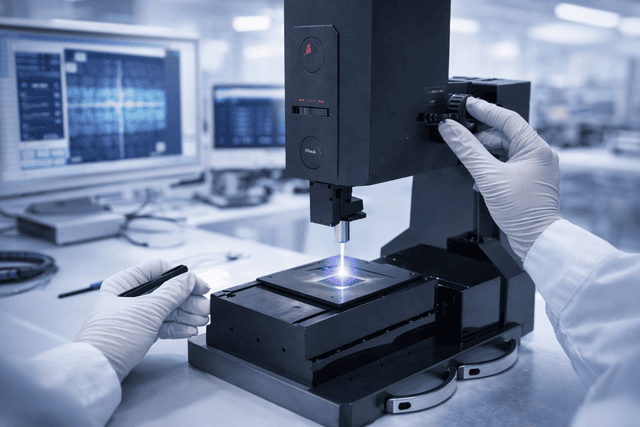
3D Nano Printing technology serves as a gateway to applications across multiple industries. Its key benefits include the ability to create complex small structures that were previously impossible with old methods, reduced costs, and improved energy efficiency. Applications span biochips, medical and biological engineering, microelectronics, solar panels, automotive sensors, display industry, optical communications, and wearable devices — as well as helping the aerospace and automotive industries produce lightweight yet highly durable components.
NANOSHAPE 3D PRINT
NanoShape 3D Print is a high-precision nano-level 3D printing technology capable of printing volumetric resolution structures as small as 100–200 nanometers. It operates on the Two-photon absorption principle, firing a Femtosecond or Picosecond laser into a photosensitive resin. The resin hardens only at the focal point where light intensity is highest, allowing the creation of highly complex and precise 3D structures.
It can be applied across various industries, including semiconductors, electronics and communications, medical and biological sciences, energy and environment, and the display industry.
Available printer series:
- Enhance Series: Standard model, uses 532nm laser, 200nm resolution.
- Excellent Series: High-performance model with broader compatibility.
- Hybrid Series: Top-tier model using 520nm laser (Pulse 250fs), resolution up to 100nm, with built-in 3D Measurement function and Polyjet Print support.
For more information, please contact us at:
725 S-Metro Building, 20th Floor, Sukhumvit Road, Klongtoei Nua, Wattana, Bangkok
Tel: 02-821-5278
Email: info@hknti.com
Line: https://line.me/R/ti/p/@816txpya