Micro Vickers Hardness Testers: A Comparative Technical Analysis of the HVS-1000Z, HVS-1000ZL, and HV-1000Z Series
HKNTI Technical Review · June 9, 2026
In materials characterization, micro Vickers hardness testing occupies a critical position, enabling precise evaluation of mechanical properties in specimens too small, thin, or geometrically constrained for conventional hardness methods. The Vickers indentation principle—whereby a diamond pyramid indenter is applied under a defined test force and the resulting diagonal impression is measured—yields hardness values applicable across an exceptionally wide range of materials, from soft non-ferrous alloys to hardened tool steels and brittle ceramics.
Against this backdrop, HKNTI, operating under the heritage of Laizhou Huayin Testing Instrument Co., Ltd. (a manufacturing enterprise established in 1948 and recognized as a national designated hardness tester production unit since 1961), has developed the Z-series micro Vickers platform as its current flagship offering. The series represents the culmination of over seven decades of continuous development, incorporating modern ARM processor control, precision optical systems, and LCD touch interface architectures first introduced in the HVS-1000Z generation (2018) and progressively refined through subsequent variants.
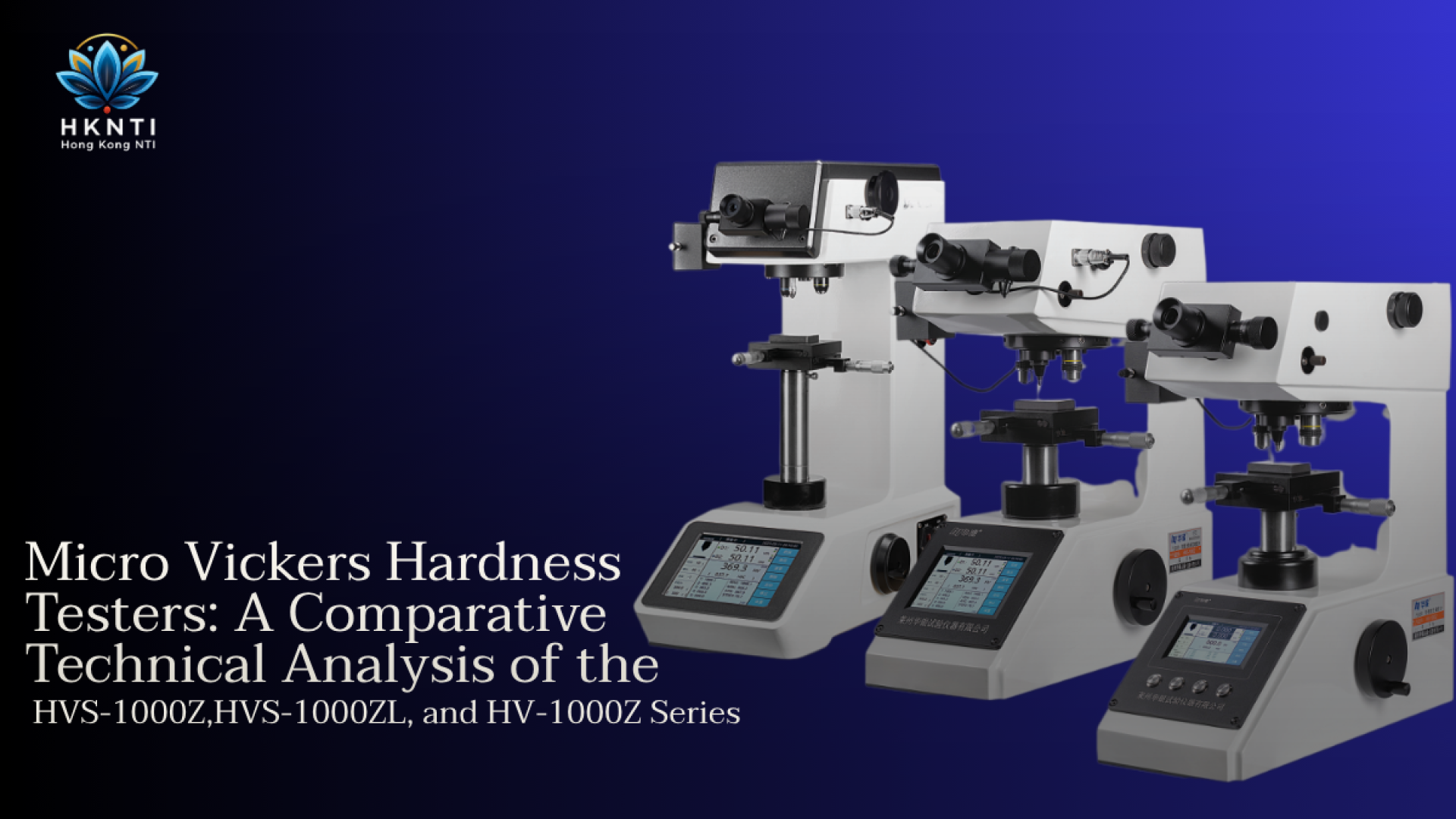
This review focuses specifically on three commercially available models: the HVS-1000Z (digital display, full-feature), the HVS-1000ZL (automatic coordinate platform variant), and the HV-1000Z (compact digital touch display). These instruments collectively address the range from standalone manual operation to semi-automated hardness mapping workflows, offering the industry a practical alternative that combines metrological efficiency, production-level yield, and scalability.
Model Profiles: From Compact Platforms to Automated Mapping Systems
The Z-series platform has evolved beyond simple equipment upgrades, moving from baseline point-measurement systems toward integrated process automation designed to reduce analyst labor and eliminate operator-induced variability.
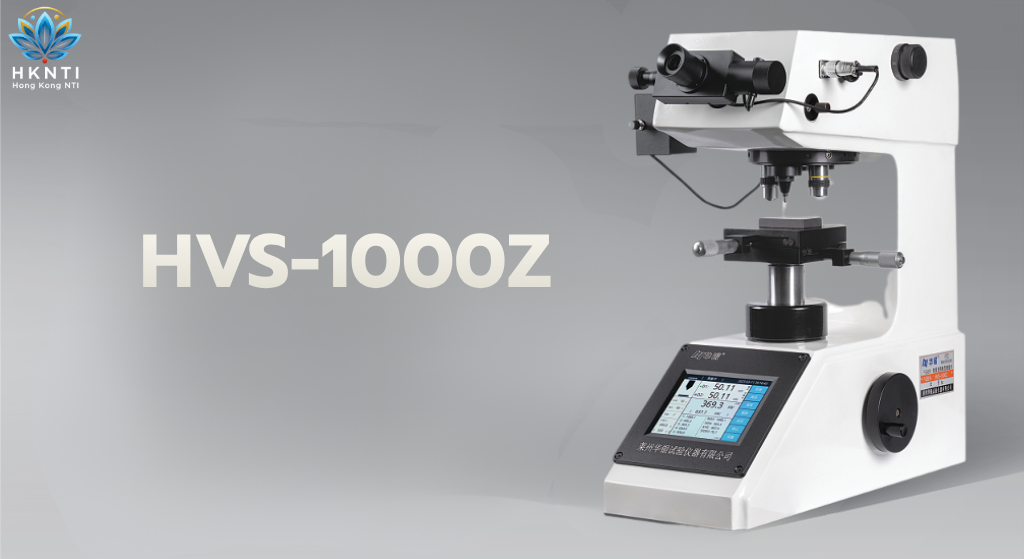
Model 01: HVS-1000Z (Digital Display Micro Vickers Hardness Tester)
The foundational model of the Z-series, designed for flexible measurement protocols and broad laboratory connectivity.
- Interface & Control: ARM-controlled, 5.6-inch bilingual (Chinese/English) LCD capacitive touch screen.
- Mechanics & Turret: Automatic turret mechanism with a frictionless spindle ensuring high precision in force application.
- Optical System: 400× measurement / 100× observation magnification; minimum detection unit of 0.0625 µm.
- Data Management: USB and RS232 interfaces with an integrated micro thermal printer; supports database synchronization and export.
- Expandability: Optional Knoop indenter and HYHV300 image measurement system.
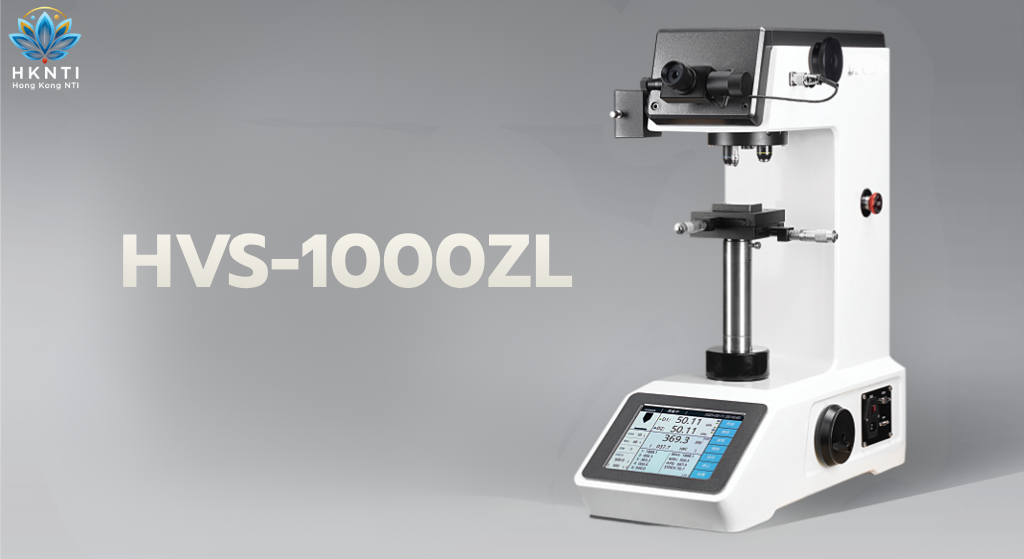
Model 02: HVS-1000ZL (Automatic Coordinate Platform Variant)
An integrated hardness mapping platform rather than a standalone device, optimized for closed-loop, high-throughput testing.
- System Integration: Built-in HYHV300T2.1 (semi-automatic) or T3.1 (fully automatic) image measurement system.
- Automation Elements: 5.6-inch LCD touch screen with unified computer supervision over turret rotation, stage displacement, and force application.
- Motorized Stage: Automatic coordinate test platform accepting computer-directed, manual handwheel, and joystick control modes.
- Imaging Capability: 3-megapixel digital camera for high-accuracy indentation capture and precise diagonal measurement.
- Analysis Suite: One-click hardened layer depth analysis, automated curve generation compliant with case depth standards, and integrated error correction.
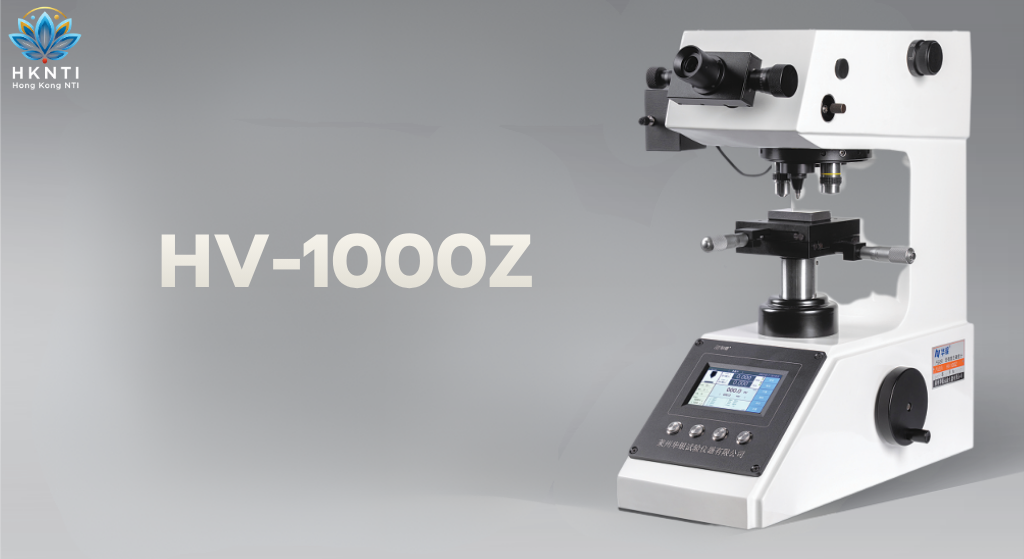
Model 03: HV-1000Z (Compact Micro Vickers Hardness Tester)
A streamlined, cost-efficient operational platform that prioritizes a compact footprint without sacrificing fundamental metrological capabilities.
- Interface & Control: 4.3-inch LCD touch screen supplemented by 4 dedicated hardware shortcut buttons to reduce complexity.
- Mechanics & Turret: Standard automatic turret and frictionless spindle mechanism.
- Optical System: 400× / 100× magnification; minimum detection unit configured to 0.25 µm.
- Data Management: Retains standard USB and RS232 interfaces for routine data export.
- Expandability: Modular compatibility with the optional HYHV300 image system for future workflow expansion.
Comparative Technical Parameters
All three models within the Z-series share a common metrology foundation, sharing identical force ranges and measuring scales while differentiating in resolution, test platforms, and native software features.
| Parameter | HVS-1000Z | HVS-1000ZL | HV-1000Z |
| Measuring Range | 1 – 3065 HV | 1 – 3065 HV | 1 – 3065 HV |
| Test Forces (N) | multicolumn{3}{l | }{0.09807, 0.2452, 0.4904, 0.9807, 1.961, 2.942, 4.904, 9.807} | |
| Test Forces (gf) | multicolumn{3}{l | }{10, 25, 50, 100, 200, 300, 500, 1000} | |
| Hardness Scales | multicolumn{3}{l | }{HV0.01 · HV0.025 · HV0.05 · HV0.1 · HV0.2 · HV0.3 · HV0.5 · HV1} | |
| Optical Magnification | 400× / 100× | 400× / 100× | 400× / 100× |
| Min. Detection Unit | 0.0625 µm | 0.0625 µm | 0.25 µm |
| Display Type | 5.6-inch LCD touch | 5.6-inch LCD touch | 4.3-inch LCD touch |
| Turret Operation | Automatic | Automatic | Automatic |
| Test Platform Type | Standard coordinate anvil | Motorized auto-coordinate | Standard coordinate anvil |
| Image System | Optional (HYHV300) | Integrated (HYHV300T) | Optional (HYHV300) |
| Data Interfaces | USB, RS232 | USB, RS232 + dedicated | USB, RS232 |
| Throat Depth | 110 mm | 110 mm | 110 mm |
| Max. Sample Height | 75 mm | 75 mm | 75 mm |
| Overall Dimensions | 470 × 320 × 500 mm | 470 × 320 × 500 mm | 470 × 320 × 500 mm |
| Net Weight | approx. 40 kg | approx. 40 kg | approx. 40 kg |
| Power Supply | AC 220 V · 50/60 Hz | AC 220 V · 50/60 Hz | AC 220 V · 50/60 Hz |
Why Can Automated Mechanical Architectures Eradicate Measurement Variation?
Micro Vickers hardness testing has long been regarded as an essential diagnostic tool for thin materials and surface layers, yet the journey from manual laboratory measurement to high-throughput production QA has faced challenges regarding operator subjectivity and part geometry.
Traditional testing configurations relying on manual turret rotation and optical ocular reading often introduce variations in indentation measurement. The Z-series addresses these challenges through a unified design philosophy:
- Frictionless Spindle System: Eliminates high-frequency buffering errors and load fluctuation during the indenter's entry cycle. The testing sequence—from initial contact through dwell time to automated retraction—is handled entirely via software protocols.
- Non-Planar Surface Correction: The underlying ARM-driven architecture provides automatic correction of hardness values on non-planar (concave and convex) surfaces. This mathematically compensates for geometry-induced distortions when testing curved components like shafts or cylindrical bores.
- Vacuum-Level Electronic Consistency: By shifting measurement extraction from manual optical filar eyepieces to digital imaging arrays (such as the 3MP camera on the HVS-1000ZL), diagonal detection thresholds are locked down programmatically, ensuring reproducibility across different operators.
Multi-Segment Deployment: From Quality Control to Advanced Hardness Profiling
The Z-series platform has completed customer validation across multiple advanced manufacturing and metallurgical segments:
- Ferrous and Non-Ferrous Metallic Alloys: Ideal for localized phase identification and grain-boundary hardness evaluations in alloy development.
- Surface Coatings, Plating, and Thin-Film Laminates: Accurate determination of superficial layer properties without substrate interference, supporting thin-section sheet metal and micro-mechanical parts.
- Brittle Materials: Characterization of structural ceramics, glass, integrated circuit substrates, semiconductor wafers, and gemstones.
- Case Depth Verification (Carburized, Nitrided, or Induction-Hardened Layers): Programmatic step-traversing across diffusion zones to automatically map hardness gradients and establish effective case depth parameters.
- Application Specificity: The HVS-1000ZL’s motorized stage and automated depth-profiling software make it the preferred choice for case depth characterization workflows (such as effective case depth per ISO 2639 or hardness traverses across heat-affected zones in weld specimens). The HVS-1000Z and HV-1000Z remain optimized for routine point-hardness verification and research testing where automated mapping arrays are not required daily.
Metrological Dimensions: The Deeper Industry Significance of the Z-Series
The significance of HKNTI’s breakthrough in consolidating the Z-series architecture can be understood across three distinct dimensions:
- Dual-Certification Compliance: All three models comply with GB/T 4340.2 (Chinese national standard for machine verification), ISO 6507-2 (international standard for verification and calibration), and ASTM E384 (American standard for microindentation testing).
- This alignment guarantees complete parity between digital imaging measurements and classical optical reference benchmarks, ensuring data validity within global supply chain quality documentation.
2. Industrial Dimension
- Comprehensive Out-of-the-Box Accessory Ecosystem: Each platform is delivered with an expansive suite of standard hardware, including diamond pyramid indenters, multiple specialized test anvils (coordinate, thin-shaft, thin-plate, flat jaw vice, and V-block variants), microhardness reference blocks, and integrated micro-printers.
- This lowers capital entry costs and eliminates third-party component sourcing friction for multi-use testing labs.
3. Strategic Dimension
- Metrological Provenance: HKNTI’s role as a principal drafting unit for Chinese national hardness and force standards, backed by long-term collaborative ties with national and provincial metrology institutes, establishes an independent closed-loop of "equipment development—standards formulation—calibration authority."
- This provides a baseline of equipment integrity that distinguishes these systems within competitive global commercial markets.
Conclusion: A Coherent Hierarchy for Laboratory Selection
The HVS-1000Z, HVS-1000ZL, and HV-1000Z constitute a coherent family of Micro Vickers hardness testers designed to address the operational requirements of the contemporary materials testing laboratory. Selection among them should be guided by throughput volume, part complexity, and automation requirements rather than fundamental accuracy, which remains precise across the platform:
- HV-1000Z: The choice for budget-conscious facilities or decentralized testing environments seeking reliable baseline performance with a simplified user interface.
- HVS-1000Z: The standard for non-automated, high-resolution research diagnostics, offering precision optics ($0.0625text{ }mutext{m}$ minimum detection) and open-ended software expansion.
- HVS-1000ZL: The preferred manufacturing pathway for high-throughput labs, replacing manual multi-step profiling with automated engineering execution and automated report generation.
Reflecting a seven-decade manufacturing heritage, this family of instruments successfully integrates modern ARM microprocessing with robust mechanical metrology, satisfying both domestic regulatory frameworks and international testing criteria.
About HKNTI
HKNTI (Laizhou Huayin Testing Instrument Co., Ltd.) is a pioneering national hardness tester production enterprise established in 1948. Melding classical mechanical metrology with contemporary automated software architectures, the company provides complete testing solutions spanning Rockwell, Brinell, Vickers, and universal hardness testing methodologies.
For more technical data and product catalog selections, please visit